Shared vs. Dedicated Hosting: Which Is Right for Your Business?
Choosing between shared vs. dedicated hosting can feel overwhelming at first. You have probably seen both options mentioned while comparing web hosting plans, but the real question is which one makes sense for your business, your budget, and your future growth.
The truth is, there is no universal best option. Some websites do perfectly well on shared hosting, while others need the power and control of a dedicated server. Understanding shared vs. dedicated hosting in simple terms makes it much easier to choose the right solution.
What Is Shared Hosting?
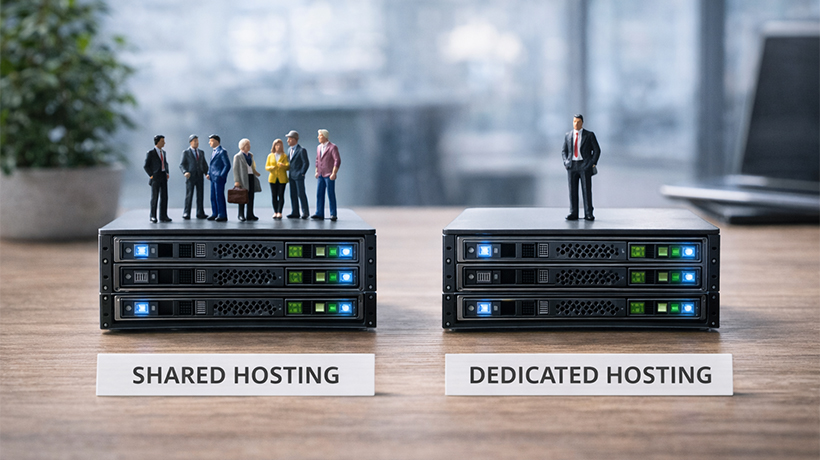
Shared hosting works a bit like living in an apartment building. You have your own space, but you share the building’s core resources with other residents. In hosting terms, multiple websites use the same physical server.
This model keeps costs low because everyone shares the server expenses. Instead of paying for an entire machine, you only pay for a portion of its resources. For personal websites, startup projects, small business sites, and brochure-style company pages, that often makes perfect sense.
Your hosting provider also handles most of the technical work. They manage server maintenance, updates, and hardware issues, so you can focus on your website rather than the infrastructure behind it.
For websites with light to moderate traffic, shared hosting usually offers enough performance. A local business website, a small blog, or a simple company site can often run very well in this environment.
What Is Dedicated Hosting?
Dedicated hosting means your business rents an entire physical server for its own use. You do not share CPU, RAM, storage, or bandwidth with other customers.
This gives you much stronger and more predictable performance. Because no one else is using the server, your website can stay fast and responsive even during busy periods or traffic spikes.
Dedicated hosting also gives you far more control. You can install custom software, adjust server settings, and apply security measures that match your exact requirements. This is especially useful for larger websites, high-traffic ecommerce stores, busy applications, or businesses with more complex technical needs.
If performance, flexibility, and isolation matter a lot, dedicated hosting can be the better long-term choice.
Shared vs. Dedicated Hosting: Cost Differences
One of the biggest differences in shared vs. dedicated hosting is cost.
Shared hosting is the more affordable option. Plans often start at a low monthly price, making them attractive for startups, small businesses, and anyone building a site on a tighter budget.
Dedicated hosting costs significantly more because you are paying for exclusive use of an entire server. The higher price reflects the extra power, control, and reliability you receive.
The right value depends on your situation. If your website is small and still growing, shared hosting is usually the smarter starting point. If your website generates revenue and performance problems could cost you sales or leads, dedicated hosting may be worth the extra investment.
Shared vs. Dedicated Hosting for Performance
Performance is another major factor when comparing shared vs. dedicated hosting.
Shared hosting is usually suitable for websites with lower or moderate traffic levels. Many company websites, blogs, and smaller online shops perform perfectly well on a good shared hosting platform.
Dedicated hosting is better suited to larger websites, heavier workloads, and regular spikes in traffic. Because the server resources are reserved only for you, performance tends to stay more stable under pressure.
If your website receives tens of thousands of visitors, runs demanding applications, or depends on fast loading times for conversions, dedicated hosting often becomes the stronger option.
Shared vs. Dedicated Hosting for Control and Flexibility
When looking at shared vs. dedicated hosting, control is one of the biggest practical differences.
Shared hosting is designed to be simple. It is ideal for websites that do not need custom server settings, unusual software, or advanced system access. Most users can launch and manage a website without needing technical knowledge.
Dedicated hosting gives you much more flexibility. You can choose specific configurations, install specialised applications, and tailor the environment to your needs. That makes it a better fit for developers, growing businesses, and organisations with more advanced requirements.
If your website is straightforward, shared hosting is often enough. If your business depends on custom tools or infrastructure, dedicated hosting gives you room to build exactly what you need.
Shared vs. Dedicated Hosting for Security
Security matters in every hosting decision.
Shared hosting providers normally include strong protections, but your website still exists on the same server as other accounts. For many smaller websites, this is completely acceptable when the provider is reputable and the platform is managed properly.
Dedicated hosting offers greater isolation because the entire server belongs to you. That can be important for businesses handling sensitive customer data, running larger ecommerce operations, or needing more control over security policies.
For businesses with stricter requirements, dedicated hosting often provides extra peace of mind.
Which Option Should You Choose?
For many businesses, shared hosting is the best place to start. It is affordable, simple to manage, and more than capable of supporting a standard business website.
Dedicated hosting makes more sense when your website has grown beyond the limits of shared resources, when performance directly affects revenue, or when you need advanced control over the server environment.
In other words, the answer to shared vs. dedicated hosting depends on where your business is today and where it is heading next.
Why Choose Ethernet Servers?
Whether you need shared hosting or dedicated hosting, Ethernet Servers offers reliable infrastructure for businesses at different stages of growth.
Their shared hosting plans include cPanel, NVMe SSD storage, free SSL certificates, daily backups, and generous bandwidth. For businesses that need dedicated hosting, they provide enterprise-grade hardware built for stronger performance and reliability.
With UK-based support available 24/7 and data centre options designed for dependable uptime, Ethernet Servers gives businesses a reliable platform to grow on.
Final Thoughts on Shared vs. Dedicated Hosting
When comparing shared vs. dedicated hosting, the best choice is the one that matches your actual needs. Shared hosting is often the right fit for smaller websites and businesses that want a cost-effective starting point. Dedicated hosting is the logical upgrade when your traffic, technical demands, or performance expectations increase.
Choose the solution that fits your business now, while making sure you have room to grow later.