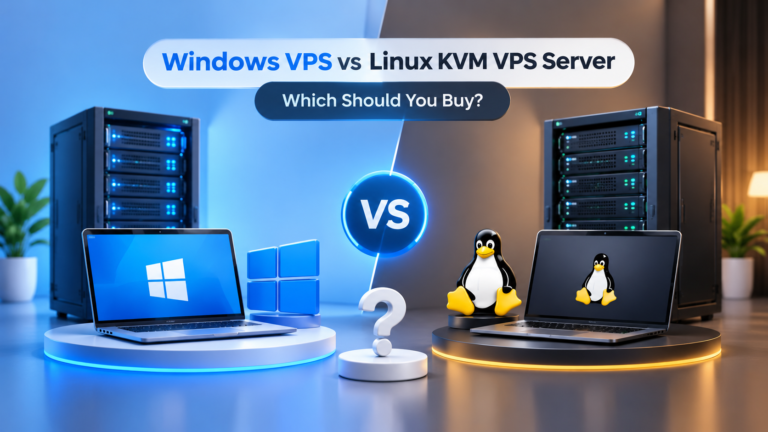
KVM VPS hosting is one of the most common terms people see when comparing hosting options. It may sound technical at first, but the idea is straightforward. In this guide, we’ll explain what it means, why so many users choose it, and how to pick the right plan in 2026.
What Is KVM VPS Hosting?
A KVM VPS gives you a dedicated portion of a physical server’s resources, including CPU, RAM, and storage, without the cost of renting an entire machine. VPS stands for Virtual Private Server.
KVM stands for Kernel-based Virtual Machine. It is a virtualization technology built into the Linux kernel that allows each virtual machine to run in its own isolated environment. Together, these technologies form the foundation of KVM VPS hosting.
In simple terms, a KVM-based VPS behaves much more like a standalone server than standard shared hosting. You get stronger isolation, full root access, and far more control over the operating system and software stack.
Why Linux Is the Standard for KVM VPS Hosting
Linux is the operating system most commonly paired with this setup because it is stable, flexible, and widely supported across hosting platforms. Most providers default to Linux distributions because they are lightweight, secure, and well suited to server workloads. This combination of KVM virtualization and Linux gives users a server environment that is both powerful and cost-effective.
Why KVM VPS Hosting Is Popular
There are several reasons this type of hosting remains popular with developers, businesses, and site owners.
Better Isolation Than Shared Hosting
Each virtual machine runs separately from others on the same hardware. That means your resources are more predictable, and activity from another customer is less likely to affect your performance. This level of separation is one of the core reasons KVM VPS hosting is trusted for production workloads.
More Control Over Your VPS Environment
A major advantage of KVM VPS hosting is flexibility. You can install custom software, change server settings, and work in an environment that feels much closer to a dedicated machine.
Broad Linux Support
Most providers let you choose from several Linux distributions. That makes it easier to match your KVM VPS to your project instead of forcing you into a limited setup.
KVM VPS Hosting vs Other VPS Types
Not every VPS plan uses the same virtualization method, and that difference matters.
Compared With Container-Based Plans
Some lower-cost VPS services rely on container-based systems, where users share more of the underlying operating system. KVM VPS hosting creates stronger separation between accounts, which usually results in better stability and security.
Compared With Older Virtualization Platforms
Older platforms can feel more restrictive when it comes to kernel access, operating system choice, and overall control. KVM VPS hosting is often preferred by users who want a more modern and reliable hosting environment.
Common Use Cases for KVM VPS Hosting in 2026
Wondering if this plan is right for you? Here are the most common use cases for VPS KVM Linux:
Websites and Online Stores
If you are moving beyond shared hosting, this setup gives you more consistent performance and full control over your web server, firewall, and software stack. KVM VPS hosting is especially well suited to ecommerce sites that need stable uptime and fast page loads.
Development and Testing
Developers often use a KVM VPS for staging environments, application deployment, isolated testing, and private development work. It is a practical way to build and experiment without affecting production systems.
Game Servers
Many game servers perform well on a KVM VPS hosting plan because dedicated RAM, better isolation, and stable CPU access help maintain performance under load.
Databases and Private Tools
Databases such as MySQL and PostgreSQL often benefit from predictable resources and consistent storage performance. The same applies to VPNs, dashboards, remote tools, and other self-hosted services. A KVM VPS hosting plan with guaranteed resources is a strong fit for these workloads.
What to Check Before You Buy a KVM VPS
Choosing the right provider matters just as much as choosing the right virtualization technology.
Confirm It Is Real KVM Virtualization
Make sure the provider is offering true KVM virtualization and not using vague marketing language for another platform. Real KVM VPS hosting gives you a fully isolated virtual machine with its own kernel.
Look for SSD or NVMe Storage
Fast storage improves load times, database performance, and overall KVM VPS responsiveness. SSD should be the minimum, while NVMe is even better for demanding workloads.
Check for Guaranteed Resources
One of the biggest advantages of a KVM VPS is consistency. Look for clearly defined RAM and CPU allocations instead of plans that depend too heavily on burstable resources.
KVM VPS Features That Matter Most
When comparing plans side by side, a few features make a much bigger difference than others.
Full Root Access
Root access should be standard. Without it, much of the flexibility of KVM VPS hosting is lost.
Operating System Choice
A quality KVM VPS hosting provider should let you deploy multiple Linux distributions and reinstall them easily whenever needed.
Network Quality and Uptime
Even a well-provisioned KVM VPS can feel slow if the network is unreliable. Look for good uptime, solid routing, and a location close to your target audience.
Easy Upgrades
Scalability matters. A good KVM VPS host should let you add RAM, CPU, and storage without forcing a full migration.
Free vs Paid KVM VPS Options
Some users start by looking for a free KVM VPS for testing or learning.
When Free Plans Make Sense
Free cloud instances can be useful for light experimentation, training, or short-term development work. However, they rarely offer the same level of isolation and performance as a paid KVM VPS.
Why Paid KVM VPS Hosting Plans Are Usually Better
For business websites, client projects, production apps, or important services, a paid KVM VPS hosting plan is usually the smarter choice. You get better stability, stronger support, and more room to grow.
How to Choose the Right KVM VPS Hosting Plan
The best plan depends on what you are running and how much control you need.
Match the Plan to the Workload
A small website or lightweight app may run well on an entry-level KVM VPS hosting plan. Larger databases, busy sites, and game servers usually need more RAM, stronger CPU allocation, and faster storage.
Decide How Much Management You Want
Some users prefer unmanaged KVM VPS hosting so they can control every part of the environment. Others want a managed plan that includes help with updates, monitoring, and server maintenance.
Final Thoughts on KVM VPS Hosting
KVM VPS hosting remains one of the best hosting choices in 2026 because it offers a strong balance of performance, flexibility, control, and affordability. It gives users more freedom than shared hosting and more isolation than many lower-end VPS alternatives.
Whether you are upgrading from shared hosting, building a development environment, or comparing providers for a production project, understanding how KVM VPS hosting works will help you make a smarter decision.